

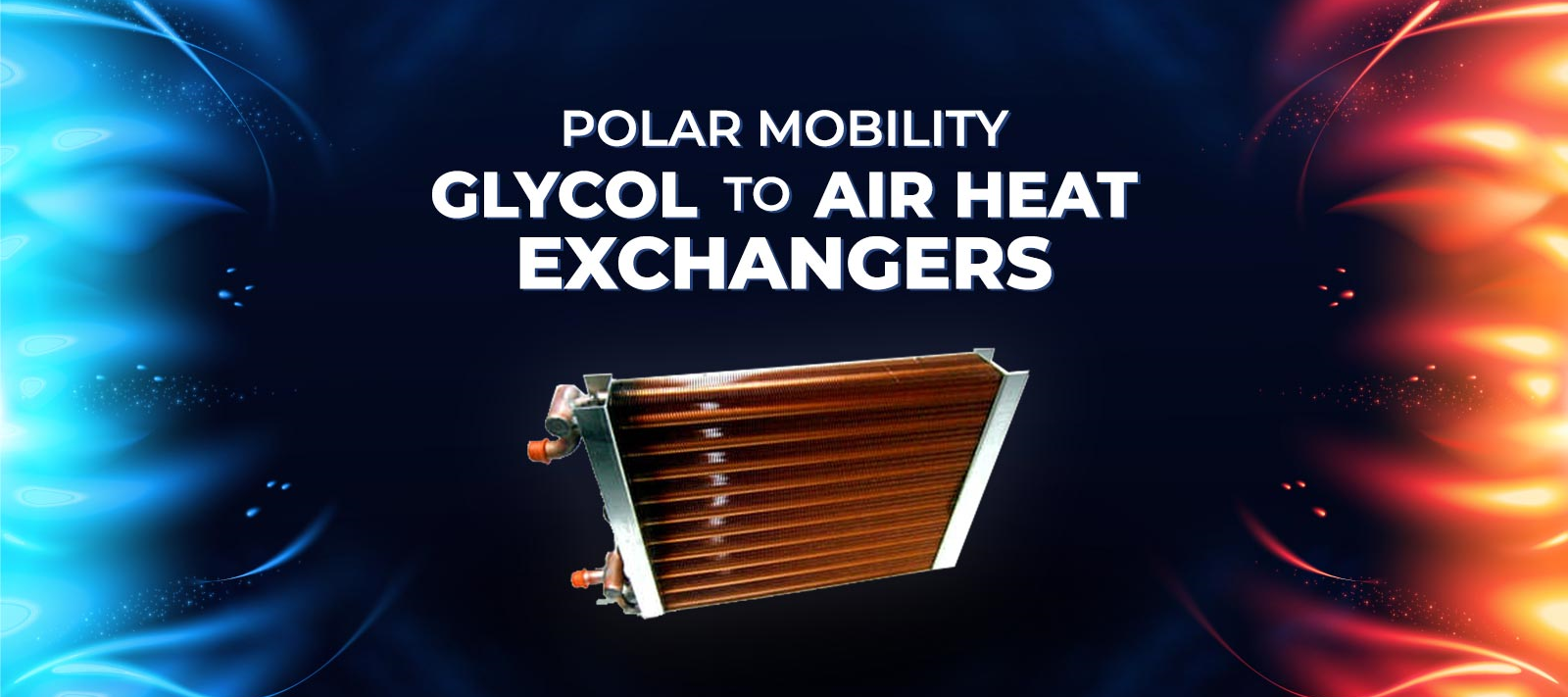
When working in extreme cold, maintaining reliable heat inside heavy-duty vehicles and equipment is critical for safety and performance. A glycol-to-air heat exchanger is one of the simplest and most effective ways to keep operators warm and equipment performing, even in extreme weather.
These systems transfer heat from a glycol mixture to the air without mixing the two—providing safe, steady heat inside cabs, compartments, or work areas. They’re efficient, low-maintenance, and built for the kind of tough environments where Polar Mobility products thrive.
How It Works
A glycol-to-air heat exchange works as part of a closed-loop heating system. Here’s what happens behind the scenes:
- Heating the Glycol – A glycol-and-water mixture circulates through the system, picking up heat from a source such as an engine, diesel-fired heater, or hydronic furnace.
- Transferring the Heat – The warmed glycol flows through a heat exchanger core, where heat passes through metal fins or coils. Air moving across those fins absorbs the heat without ever touching the glycol.
- Warming the Space – The heated air is then pushed into the cab or work area, creating a comfortable, consistent temperature.
- Recycling the Heat – Once the glycol gives up its heat, it loops back to the source to be reheated—and the cycle keeps going.
It’s a simple, clean process that keeps exhaust fumes completely separate from the air you breathe.
Why Use Glycol Instead of Water?
Water conducts heat well, but it freezes fast. Glycol changes that. It’s the key ingredient that keeps your heating system working when temperatures drop well below zero.
Here’s why glycol makes all the difference:
- Freeze Protection – Prevents the fluid from freezing or damaging components, even in the coldest weather.
- Corrosion Resistance – Additives protect pipes and metal surfaces from rust and scale buildup.
- Reliable Performance – Keeps the system running smoothly across wide temperature ranges.
- Less Maintenance – Because it’s a closed-loop system, there’s minimal contamination and fewer service intervals.
Glycol-based systems are ideal for mobile and remote heating applications that need reliability with minimal attention.
Where You’ll Find Glycol-To-Air Systems
Glycol-to-air heat exchanges can show up anywhere reliable, efficient heat is needed on the move:
- Heavy Equipment and Mining Trucks – Keeps cabs warm and operators focused.
- Oilfield and Construction Equipment – Prevents freeze-ups and protects vital systems.
- RVs and Campers – Delivers clean, quiet heat without burning inside air.
- Fleet and Transport Vehicles – Maintains interior comfort without idling.
- Hydronic Systems – Works alongside fuel-fired heaters and engine pre-heaters.
The Advantages of Glycol To Air Heat Exchange
When you’re looking to safely and reliably heat your heavy-duty equipment, glycol-to-air heat exchange delivers a number of valuable benefits to keep your operation running smoothly:
- Cold-Weather Ready – Built to handle sub-zero conditions without the risk of freezing.
- Durable and Reliable – Corrosion-resistant components extend system life.
- Efficient and Cost-Effective – Excellent heat transfer with low energy use.
- Low Maintenance – Closed design reduces contamination and wear.
- Flexible Installation – Easy to integrate into existing mobile heating setups.
- Clean Heat – No exhaust fumes or combustion inside the cab.
Why Choose a Glycol To Air Heat Exchange from Polar Mobility?
A glycol-to-air heat exchanger is one of the most dependable ways to heat mobile equipment in cold climates. It uses a safe, sealed system to transfer heat efficiently—keeping your operators comfortable, your equipment protected, and your operation moving.
Ready for reliable mobile heat? Stay productive no matter the temperature. Contact Polar Mobility to discuss our range of Canadian-made, CSA-approved solutions built to perform in the toughest conditions.